1 World Education
My Education Story
by Penelope Torribio, Mrs. T.
I’d like to tell you a story.
It’s my story, but it may also be the story of one of the children sitting in your classroom today.
When I was a little girl, my mother was burned over 90 percent of her body. For more than a year, she fought for her life while I suddenly became responsible for helping care for my four younger siblings, and a small five acre farm.
The adults at school knew what had happened to my mother.
No one asked how I was doing.
No one asked if I needed help.
At the same time, I struggled every day to learn. From kindergarten until I was seventeen years old, my teachers believed and I believed, I wasn’t very smart. Years later, I learned the truth. I had and have profound dyslexia, but no one recognized it.
I often wonder how different my life might have been if just one teacher had looked beyond my grades and my issues in reading, writing, and math, and seen the child standing in front of them.
That little girl never forgot.
I became a teacher, not because teaching was easy. Not because it paid well. I became a teacher because I wanted every child to have what I didn’t—a teacher who saw them, believed in them, and refused to give up on them.
Today I hear teachers say on social media that Gen Alpha cannot be taught, that parents have made teaching impossible, and that the classroom has changed too much.
The classroom has changed.
Children have not.
Behind every difficult behavior is a story.
Behind every struggling reader is a reason.
Behind every child who seems unreachable is a human being waiting for one adult to notice.
If you are thinking about leaving teaching, I understand. This profession has never asked more of educators.
But before you decide, I hope you’ll spend some time here, at 1 World Education.
Early in my teaching career, I began working with children and teens in danger to themselves or others. I had no idea what I was getting into.
On my first teaching day, in my first classroom, I realized that I could not teach my students subject matter without addressing how they thought and behaved. I also
began my first behavior transformation journal. Would you like to read my first entry?
Because my students were frequently behind in general knowledge, academics knowledge, and social-emotional skills, I developed a motto:
“Never teach one thing when you can teach two or more.”
I named this high-density learning.
You know that journal I mentioned above. My teacher journals helped me keep track of my behavioral and academic learning goals for whole-class instruction, and if necessary, Individual and behavioral objectives. Later on this became the major system for what I call
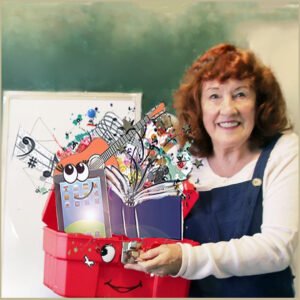
Penelope Torribio,
The Connected Classroom
Quote by Maya Angelou, poet
“Too often, creativity is smothered rather than nurtured. There has to be a climate in which new ways of thinking, perceiving, and questioning, and I must add creative action, are encouraged.”
But how? How do we create this climate, this atmosphere of creativity?
Developing creative thinking is the foundation of the tools and techniques presented in 1worldeducation.com.
I am an educator, teacher trainer, behavior transformation specialist, singer-songwriter, master puppeteer, and author.
When I started teaching, I was not a creative thinker in any area.
I had never written anything outside my class assignments.
I had never held or owned a guitar or sung outside my bathroom.
I had never owned a puppet.
I could not draw a stick figure.
The only thing I had before I began teaching was a big heart for students, particularly those who were struggling in school, as I had. Over the years, I have developed skills and talents to help students find theirs.
Although it was not my plan, I ended up transforming myself, even more than my students.
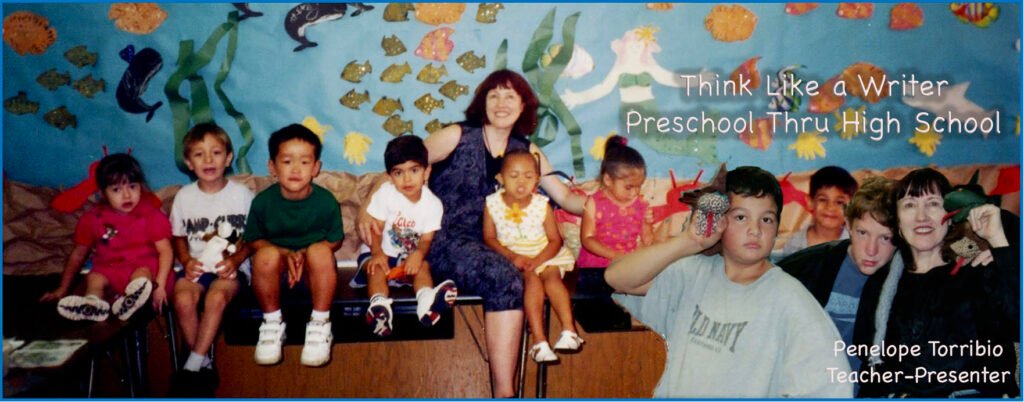
I was an experimenter, a scientist, and what I discovered was that brain-based learning works, and that teaching my students how to THINK LIKE A WRITER would help them academically and socially.
I also discovered a system that helps to create the best learning environment. I call it THE CONNECTED CLASSROOM,
Together, Think Like a Writer and the Connected Classroom provide the foundation and philosophy for all the tools and techniques on this site, which have been developed and tested over many years in the classroom.
This page is the index page for all educators and people who believe the future is created to a large degree in our schools.
Click the titles to go where you want. It is kind of circular, as everything in the end-Connects.
The Connected Classroom
Think like a Writer
The Education Journal
Directive Drawing
Education and the Magic of Puppetry
Educational Stories, Songs, Scripts, and Videos
Educational Musicals
Edu-Tainment Novel
About Penelope
1 World Education Store
1 World Education Podcasts
1 World Resource Page