“Alone we can do so little, United we can do so much.” Hellen Keller
“We are only as strong as we are united, as weak as we are divided.” Dumbleldore
Education magazines such as “NEA” and “Education Week” report that 7 out of 10 teachers consider classroom behavior a major issue. Some report that classroom behavior is getting worse. And they also report that their students are difficult to teach because they are so diverse in many ways.
In this section, I am not going to focus so much on individual behavior interventions, but rather on a system to bring a diverse classroom together for optimal learning and o optimal living. I call this system, THE CONNECTED CLASSROOM.
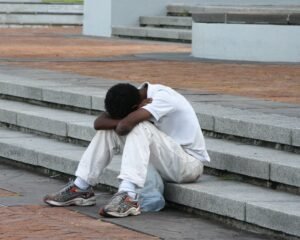
However, the classroom is made up of individuals. And some of these individuals are facing a life that you would not want to live. The following is a song I wrote while working with foster students in locked-up facilities. It actually was a favorite song of some of boys.
He’s Acting Real Tough
by Mrs. T., Penelope Torribio
He’s nine years old and acting like twenty,
He doesn’t have a daddy, and he doesn’t have a mommy.
He’s fussing and fighting, cussing, and a biting.
He’s acting real tough, but he’s a little boy frightened.
He doesn’t have friends because he doesn’t know how.
He’s a lonely little boy, rapping Little Bow Wow.
He says stay away, but that’s not what he means,
He’s a contradiction in little blue jeans.
Well, things haven’t been fair; they haven’t been just.
He just needs someone that he can trust.
It won’t be easy, but we’ve got to find a key.
To let that little boy fly, set the little boy free
He’s nine years old and acting like twenty,
He doesn’t have a daddy, and he doesn’t have a mommy.
He’s fussing and fighting, cussing, and biting.
He’s acting real tough, but he’s a little boy frightened.
I am going to tell you a little story about myself.
We lived in Cottonwood, a small town in Northern California. When I was twelve, my mother threw gasoline in a potbelly stove to light it, not realizing there were live coals. She was burned over 90% of her body. They didn’t think they could save her, but they did. It took nearly a year to recover, it was. complicated because got poison ivy in her burns.
Any way became, not only the mother of my four siblings, including a two year old, but I also had the responsibility of ae 5-acre farm with cows, goats, pigs, chickens, rabbits, ducks, and dogs. And we had a milk cow, I churned the butter and organized my brothers to keep everything fed and watered. I forgot to mention keeping a small garden thriving.
My father, bless him, was an alcoholic. At this time he did have a job at the Redding post office, about nine miles from home. Of course, he was in shock, as we all were.
The school knew my mother was in the hospital and later slowly recovering, but not one administrator, nor one teach said a word to me. No support from the school. When you get to About Penelope, you will learn that I was failing school. Not just because of my mother, but because of undiagnosed dyslexia. I am sure that the school’s coldness underlies all my desire to help students, especially troubled students.
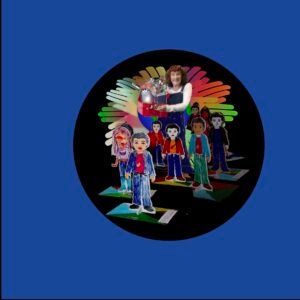
Over the years, I developed a system for working in a diverse classroom. Admittedly, I worked primarily in special education, but now it appears that after COVID, almost every classroom is diverse,
every class is special ed.
If you read the news about the trouble with schools, you understand that what I call The Connected Classroom is of paramount importance.
Misbehavior in schools frequently leads to misbehavior in the community. I promise you that complete focus on “raising up,” an individual academic with its reliance on technology, is not going to lead to a more caring school environment. The Connected Classroom needs to be a central part of the school curriculum,
for better learning and better living.
School Choice is not an easy solution.
In addition, school choice is not a solution. I saw this work out in a California School District. In the same district, they had schools with 97% lowcome homes. North of these schools were high-income areas. The district decided to bus the low-income students to the high-income area. But then, they didn’t have room for the high-income students, and they were bused to the low-income area. The parents of the high-income area made sure their students had better books, better supplies, and better playgrounds. The low-income parents were too far away, nearly twelve miles from their homes. The more established teachers went to the high-income students in a low-income area.
Right now, 87% of students in the United States attend public schools. Another 9 or 10% go to private schools. And anyway, private schools often have the same issues as public schools. There is growth in homeschooling, but it is only 4 to 5% now. And I am sure you all know that not every parent is prepared to be a homeschool teacher, not to mention that at this time, many families need two incomes. They don’t have time to be homeschool teachers.
No organization comes close to the impact of public schools.
Well over 90% of our school-age population goes to school. Most of our inventors, scientists, politicians, artists, medical workers, public workers, service workers, farmers, etc go to our public schools. Additionally, almost all of the criminals, our homeless, our drug addicts, go to the public schools. It is the best way to reach and teach students to support each other, to create a kinder classroom, and then a kinder community, a kinder state, a kinder country, a kinder world.
Establishing Collective Classrooms that bring a diverse student population together, is a great step.
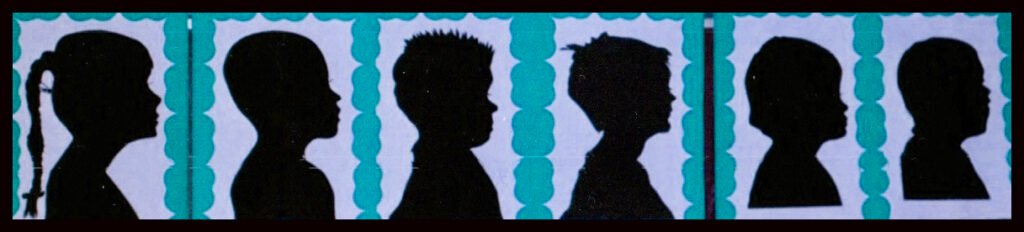
Here is my system-it works for preschool, elementary, middle school, and high school.
It so simple:
1. Teach the students to love the natural world and diverse cultures.
2. Help the students build strong bonds with their teachers and itinerant support staff.
3. Help the students to like themselves, to understand their gifts, their learning styles,
and what I call their predictive future.
4. Help students accept differences, celebrate peers’ accomplishments, show sympathy for those facing difficulties, and express gratitude for the great classroom they belong to.
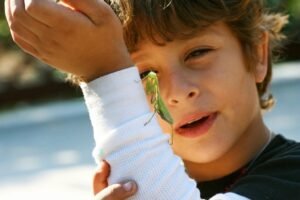
Starting with nature. It is a safe subject. It builds wonder. Some of the techniques I have used can be found in Songs, Poems, Art. But I’ ‘ll share a few ways I have drawn attention to nature. For the young kids I have created a video series, Take Ten, 10 Minutes with Nature:
Bugs and Those Who Love Them,
Birds and Those Who Love Them,
Water Birds and Those Who Love Them,
Flowers, and Those Who Love Them,
Reptiles and Those Who Love Them,
Oceans and Those Who Love.
During the short photo videos, I encouraged talking, asking questions, ie, “What colors are the flowers?” “Who loves flowers?
The point is, this is not a lesson, and then move on. It is also to get students to talk to each other about nature.
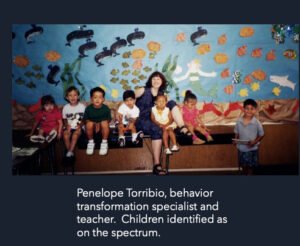
Elementary and Ecological Musical, Songs, and Art projects. These lessons should be over exteneded periods of time.
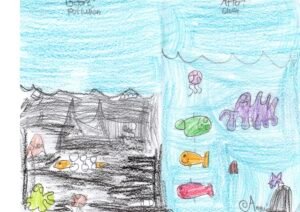
With Middle School and Teens, I would frequently say, “Do you want to hear the songs I teach the little kids? And I would sing and teach them an ecology song. I would just present it differently.
Photography and Nature.
I let my students use my camera, encouraging them to take a photo of something in nature.
Then ask them to research their subject.
Then write something in the voice of the photograph from nature, or to put the object into a story, or imagine a reaction to the subject. nature. something in nature, research it, imagine a story, either from the object’s point of view, or from the observer’s point of view, or from another point of view.
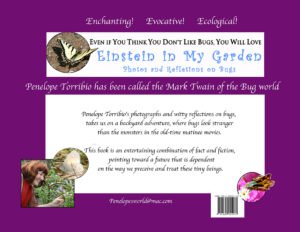
Over the years I wrote many examples for my students. I made it into a book called “Einstein in My Garden, Photos and Reflections on Bugs.”
I helped several of my students get published in a magazine and some into a teen poetry book. My students love to be published. I stressed in my classes that they didn’t have to turn 18 to become a published author. I met a sister and brother who wrote and illustrated a children’s book. When I met them they had sold 10,000 copies. My students loved that story. I was one of the customers of this simple, but heart felt children’s story.
The second area is to build trust with teacher. You have to show you care, and that like to have fun.
The 3rd area is to help the students like and admire themselves.
I think I mentioned this somewhere else, but one of the boys in the class was 8 years old. He couldn’t write his own name. But he contributed the best story ideas from the spelling list. After one of my classes, he said to me, “I’m a great writer, aren’t I?”
I told him yes, and I meant it, because writing is not spelling, it is not grammar, it is not forming letters. For me, writing is communicating in any way possible, something that is worth keeping. The function of the Spelling Story is to help students develop and recognize their imagination. And the funny thing is, for many of my students, this leads them to write or type what they have imagined.
ESL, Title 1.
My students were in high school. For all their early years, they had been placed in special education. All of a sudden, the students in special education were tested, to see if it was not that they were intelligent, but they had difficulty moving from Spanish to English. My responsibility was to teach them for the first three hours of school, and then help them integrate into “regular classes.”
There were several issues with this assignment. But overall, there was a confidence issue. At breaks and lunch, I would follow my students around and write down how they talked to each other in English. I would read back to them their colorful dialogue. They were behind in all subjects, but they were smart and funny. They just had to hear it. Then we turned their dialogue into a story. They learned about themselves, and I helped them see who they could be.
The next story was about my position as the Education Coordinator at Charter Psychiatric Hospital. I taught the elementary school-age children, ages 4 to 12, and, in the afternoon, the teenage students, ages 13 to 18. They were generally in the hospital for three weeks to three months, so short-term.
Each student, upon admittance, was tested academically by a psychologist. I was supposed to look at the results and teach to it. But the problem was the psychologist took a week and a half to two weeks to give me the results of test. What was I supposed to do in the meantime? I just want to remind you that many of the teens came into the hospital in handcuffs, angry, depressed, and often disturbed. I couldn’t wait around for the test results.
But this turned out to be one of the greatest revelations to my system. I decided I would just ask the students what they needed help with. I put it in the form of a questionnaire. For the younger children, I put it in the form of pictures. They were to color what they like about school. What they liked about themselves. How they learned. What they needed to learn.
I had been teaching for a long time. Why didn’t I just ask what the student thought they needed help with? It was surprisingly effective. Combined with my helping them discover their gifts, it was truly was shockingly effective.
I put the questionnaire in my book, “ArtSmart, Superior Learning in the Inclusive Classroom. I will put it on the resource page. Asking my students what they needed help with put the power back into the hands of the student.
Yes, some needed a little encouragement, but for most students, this worked. It let them know that they were just bad at math, but they might be missing some fundamentals that were making them fall further and further behind. Sometimes with a little help they could catch up.
Also in ArtSmart, which I have not republished yet, I talked about brain-body health and its relationship to learning and positive living. It is the idea of giving power over to the student to the greatest degree possible.
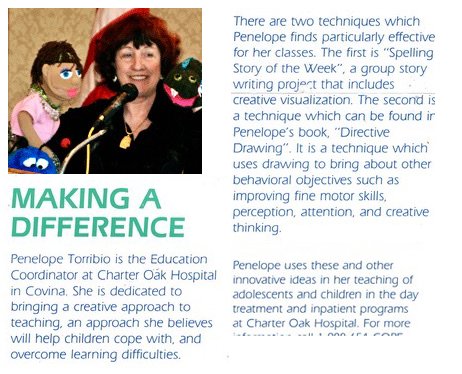
The fourth area is peer relationships. I call this The Connective Classroom. The spelling story was a popular activity in the elementary classroom. To build the relationship for me, it was through teaching whole-group activities. Especially, whole group writing projects. This allowed me to teach writing and communication while also working on peer relations. The fourth area has to come after the other three. 1. Help the students build a relationship with nature and other cultures. 2. Build a relationship with the teacher. 3. Help the student build a positive relationship with themselves.
Only then are they ready to relate to their peers. I am not saying that you don’t do some relationship work while you are working on the other three areas, but things will go much more smoothly and be more successful when the other three areas are established.
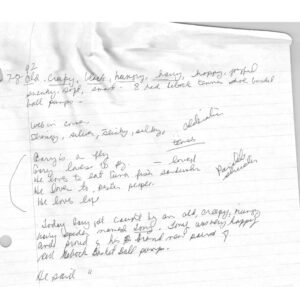
Classroom projects where you work together to produce something magical will change your classroom. At Charter, I had kindergarten-middle school, what could I do? I found their spelling level. Asked each student to contribute a word to our spelling story. The word should be as concrete as possible-we discussed the kind of word that each student should choose. Below is a little example, conducted by a student.
Do you know how I included the teenagers? I asked, “Do you want to hear what I do with the younger children?”
They most often answer yes, then I do exactly what I do with the younger children. Teenagers don’t want you to treat them like children, but most challenged teenagers missed out on childhood. If you can give back to them, you can change their lives.
You will really see this on the page THINK LIKE A WRITER, and EDUCATIONAL PUPPETRY.