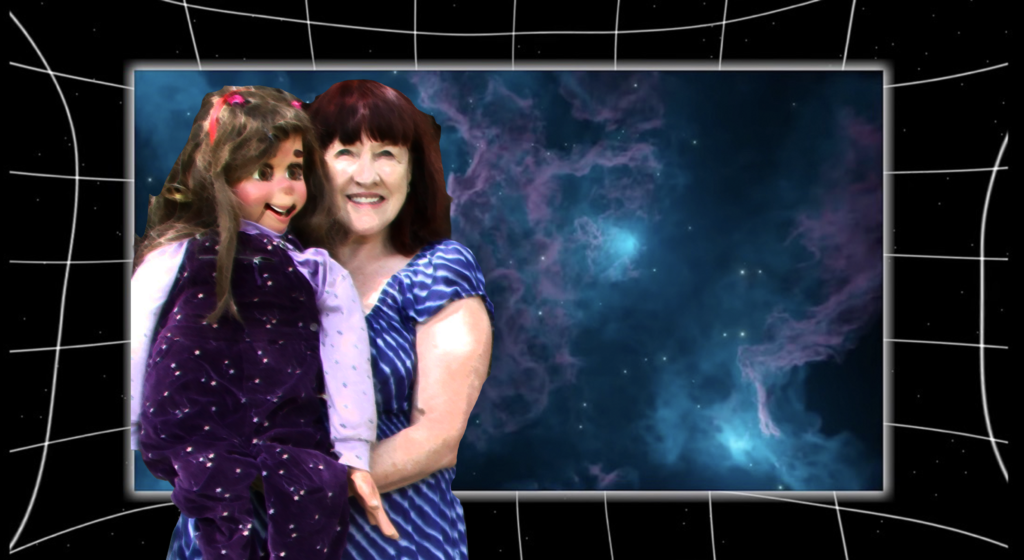
Answers: When you are working with teens, especially challenged and challenging teens.
I had used puppetry to reach and teach THINK LIKE A WRITER and THE CONNECTED CLASSROOM, but I did not see the distinct value of using ventriloquism as an educational tool. I also did not recognize the value of being a very bad ventriloquist.
I am recommending that if you are an educator of children and teens, you become a ventriloquist, too. I will just tell you a short story of how I became a ventriloquist.
The Story.
I was hired to teach artful activities at a residential boys’ school: video production, video animation, guitar, music, and puppetry. During my interview, I was told I had a $2,000 budget for my puppetry class.
However, there was a catch. I had to spend the $2000 by the very next day. It seems the money had an expiration date.
Today I could spend that money in a few minutes. But in those days, businesses, including puppet sales, were just getting online. By accident, or providence, I discovered a ventriloquist figure on the internet for $2000.
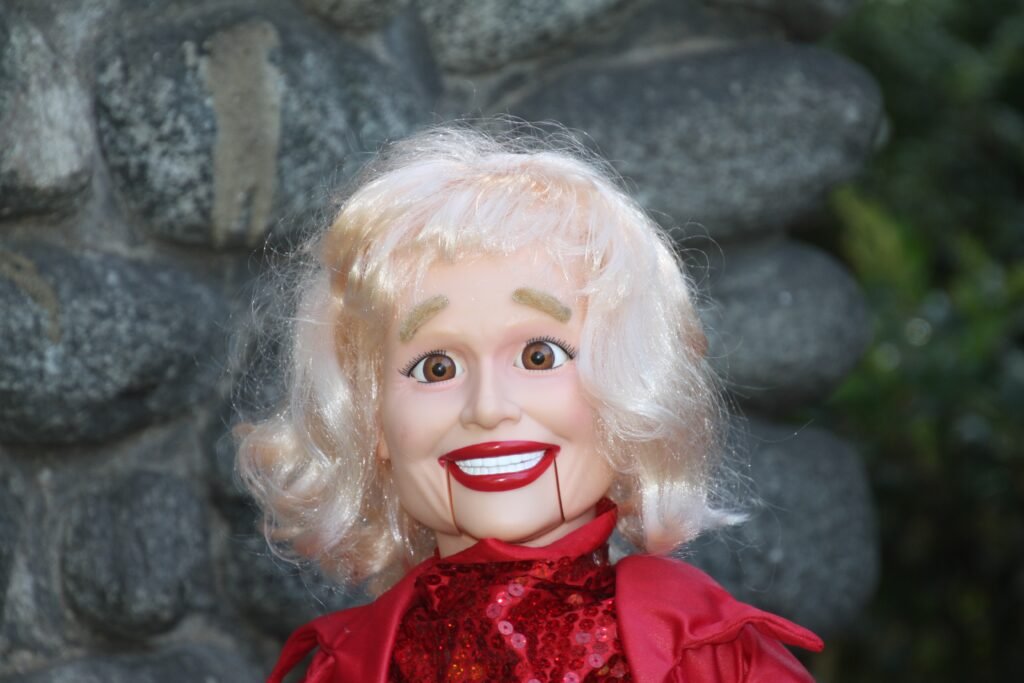
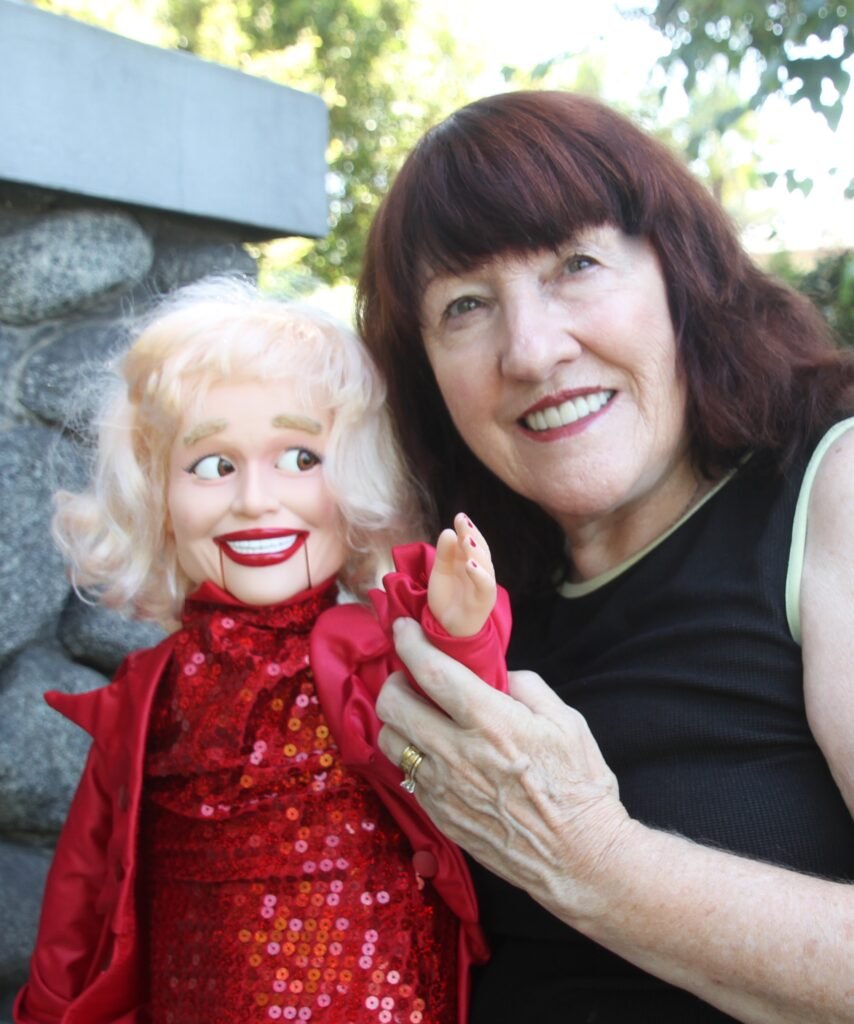
The figures were full pro. They had eyebrows that raised, eyes that opened and shut, and eyeballs that moved from left to right. Of course, the mouth moved, and the head moved sideways, up and down, and if necessary, could completely turned around. And they cost $2000! I bought one for the school and one for me to practice with.
When the figures arrived in the mail, it dawned on me that I was not a ventriloquist. The only thing I knew about ventriloquism was from the movies, Edgar Bergen, and some ventriloquists I had seen on TV. I bought a booklet and tape series.
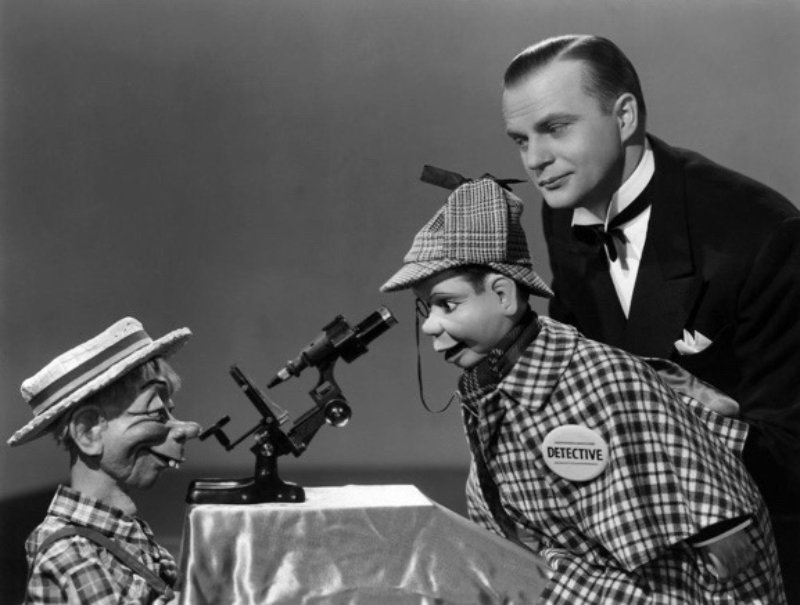
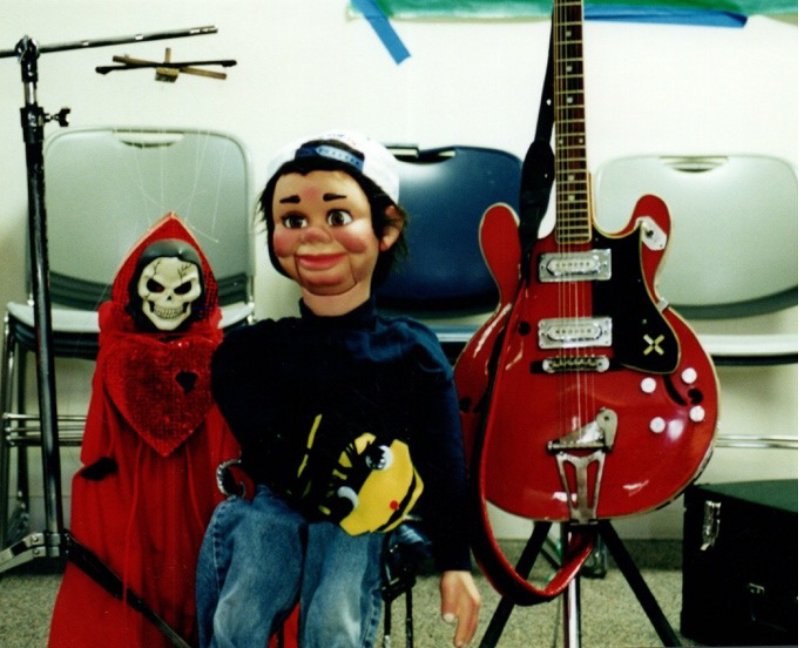
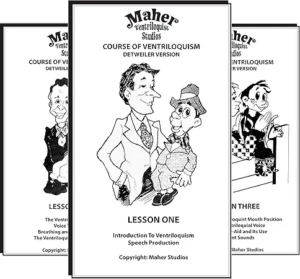
I walked into my first class armed with the boy dummy and Maher’s course. I added a little frosting on the cake by informing my students that if they learned ventriloquism and how to write a successful sketch, they could make $2,000 an hour. Adding that I had lied. It was really $2,000 for 15 minutes, plus transportation, hotel, and food. A side note, I had recently attended a conference where a ventriloquist performed between speakers. I suggested the students read up-to-date business principles and then write a comedic script based on these. I caught my students’ attention.
It turns out that as the teacher, I was set up to fail. I would demonstrate my ventriloquism skills, and the boys would all say that I was moving my lips. I denied it. But secretly, I knew they were right. I had learned that the younger you start your ventriloquism journey, the better you are at talking without moving your lips.
The boys loved the ventriloquist figure, and they loved being better ventriloquists than their teacher. But one thing I was better at was scriptwriting. They needed me. They also needed a little help with puppet manipulations and character and voice development. We became THE CONNECTED CLASSROOM.
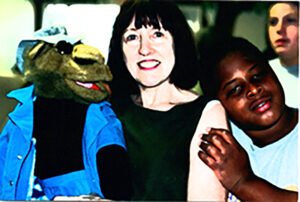
Ventriloquism turned out to be a wonderful
teaching tool, and I began to expand my behavioral objectives.
Determining the character of the vent figure is a powerful way to talk about feelings and emotions.
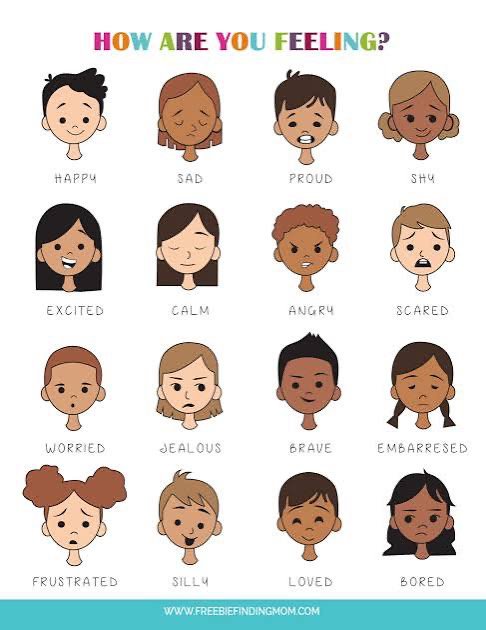
Here are a few emotions that can be part of a vent character or emotional story: playful, grouchy, resentful, dumb, lonely, nervous, confident, bold, bored, mad, sad, silly, sick, weak, strong, and energetic.
Instead of dealing with the students’ emotions, we put it on the shoulders of the vent figure.
In developing the character of the ventriloquist figure, we studied how these emotions could be conveyed through body/head/face movements and vocal expression. and how these are often universal expressions of emotions.
Ventriloquism also has the advantage of teaching students to talk and listen to themselves. I call this the second voice or inside voice. Making a connection between how they talk to their vent figure and how they talk to their second voice gives the students a powerful tool to identify and change emotions or moods, or stop undesirable actions.
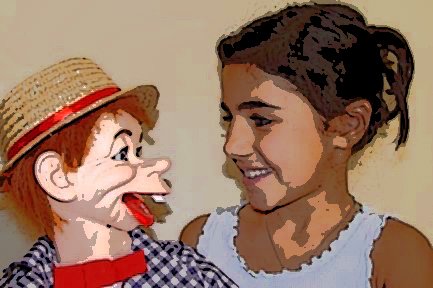
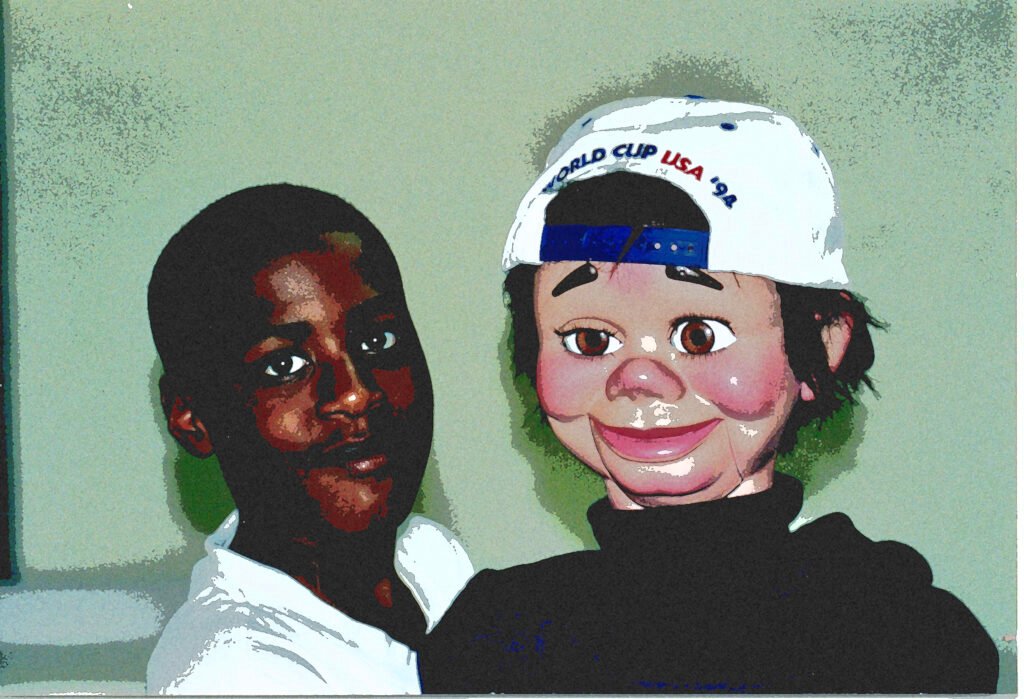
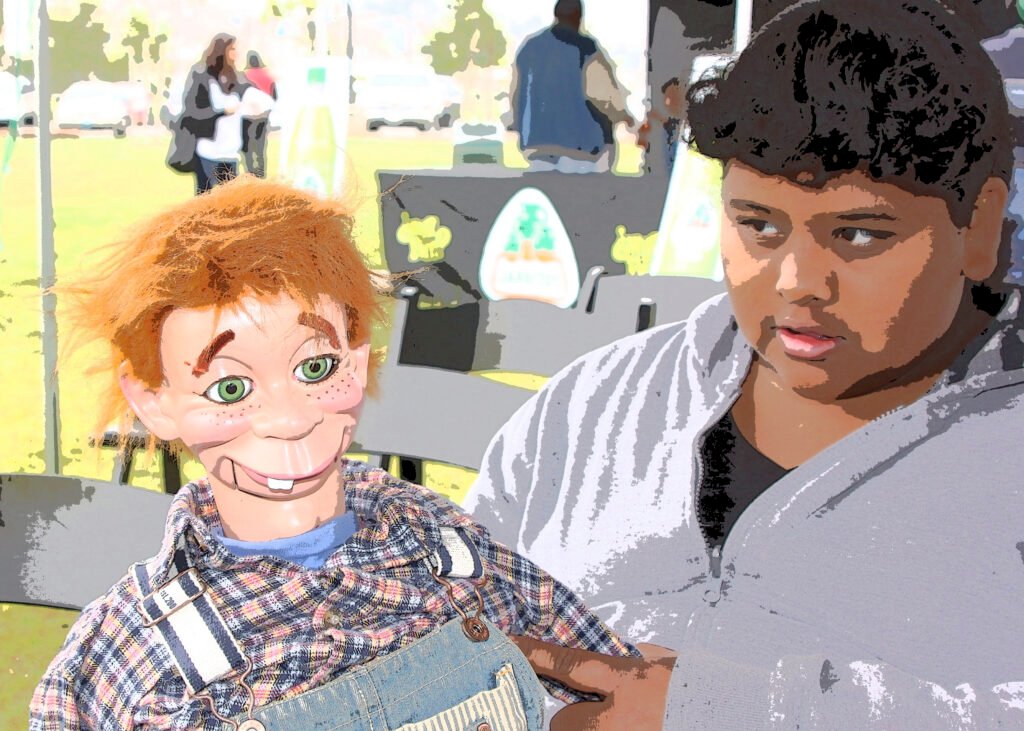
Students who do not know how to talk—hit. Through ventriloquism, students can learn about emotions, how to read them in others and themselves.
Students who do not know how to express feelings—throw things. Ventriolquism can help students learn how to change their feelings or to ask for help.
Students who feel they are unrecognized, I call these “ghost children.” Ghost children. Some of these children survive, but some become s the most dangerous people to themselves or to others. Ventriloquism can give these students special time to shine, reducing negative thinking and behavior.
Students who can not read or who misread the faces and
feelings of others are lonely and maybe angry. Ventriloquism can give them a friend, and some tools for making friends.
Students who are having fun while learning are less likely to act out.
Students who are recognized for their gifts and talents may change the world, or at least their lives.
In addition to these social-emotional interventions, ventriloquism can teach reading and writing skills without focusing on the problems.
One of the great advantages of ventriloquism is that it encourages humor, laughter, and playfulness. I keep a pile of joke books around as the basis for a script. You can check out some scripts in the 1 World Education Resource Page.
Humor, Laughter, playfulness.
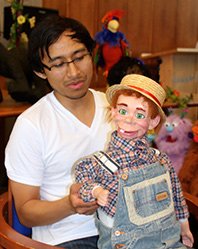
Many of our greatest thinkers recognize the importance of humor, laughter, and playfulness. Puppets have the ability to help because they can be serious and/or funny.
” Everybody laughs the same in every language because laughter is a universal connection.” – Jakob Smirnoff1
“Laughter is an instant vacation.” – Milton Berle
“I think laughter may be a form of courage. As humans we sometimes stand tall and look into the sun and laugh, and I think we are never more brave than when we do that.” – Linda Ellerbee
“There is little success where there is little laughter.” – Andrew Carnegie
“At the height of laughter, the universe is flung into a kaleidoscope of new possibilities.” – Jean Houston
“Laughter is the shortest distance between two people.” – Victor Borge
“A person who knows how to laugh at himself will never cease to be amused.” – Shirley MacClain
“In the sweetness of friendship let there be laughter, and sharing of pleasures.” – Khalil Gibran
“Laughter is one of the best medicines around for relieving stress and for creating a more healthy spirit. And, one of the greatest aspects is that it is totally free and can be done by anyone.” – Byron Pulsifer
“I have seen what a laugh can do. It can transform almost unbearable tears into something bearable, even hopeful.” – Bob Hope
“When you lose your laugh you lose your footing.” – Ken Kesey
“You cannot be mad at somebody who makes you laugh – it’s as simple as that.” – Jay Leno
“Daily laughter has been shown to elevate our moods, promote creativity and give us more energy.” – Robin Sharma
“When we feel joyful, euphoric, happy, we are more open to life, more capable of seeing things clearly and handling daily tensions.” – Leo F. Buscaglia
“There is nothing in the world so irresistibly contagious as laughter and good humor.” – Charles Dickens
“Laughter can bring a new perspective.” – Christopher Durang
“Gratitude helps you to grow and expand; gratitude brings joy and laughter into your life and into the lives of all those around you.” – Eileen Caddy
“If we couldn’t laugh we would all go insane.” – Robert Frost
“Hearty laughter is a good way to jog internally without having to go outdoors.” – Norman Cousins
“Life is worth living as long as there’s a laugh in it.” – L.M. Montgomery
“Always laugh when you can, it is cheap medicine.” – George Gordon Byron
“Laughter is poison to fear.” – George R.R. Martin
“There is a thin line that separates laughter and pain, comedy and tragedy, humor and hurt.” – Erma Bombeck
Puppetry, including ventriloquism, is a great tool for humor.
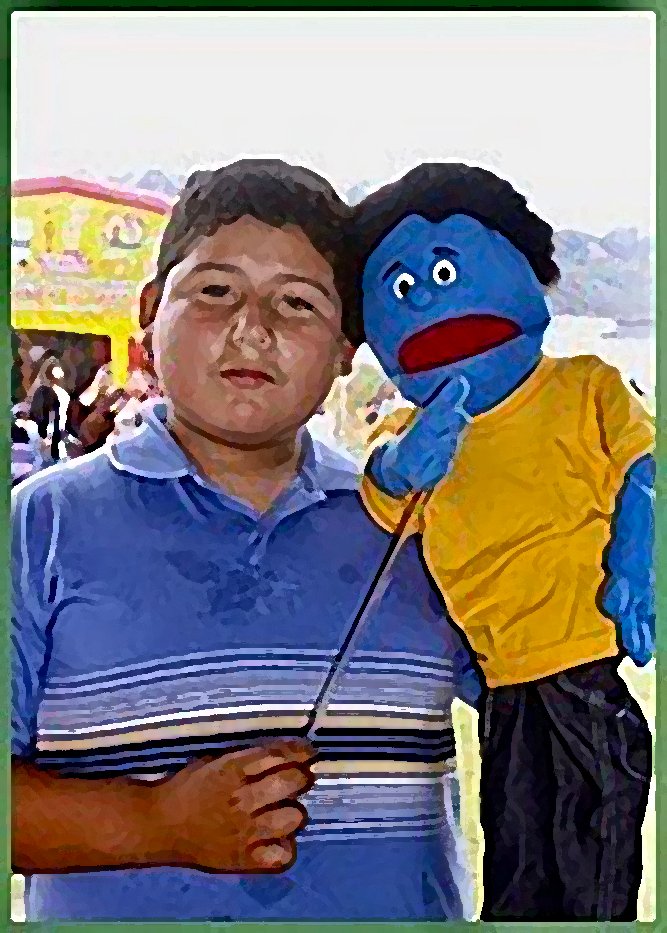
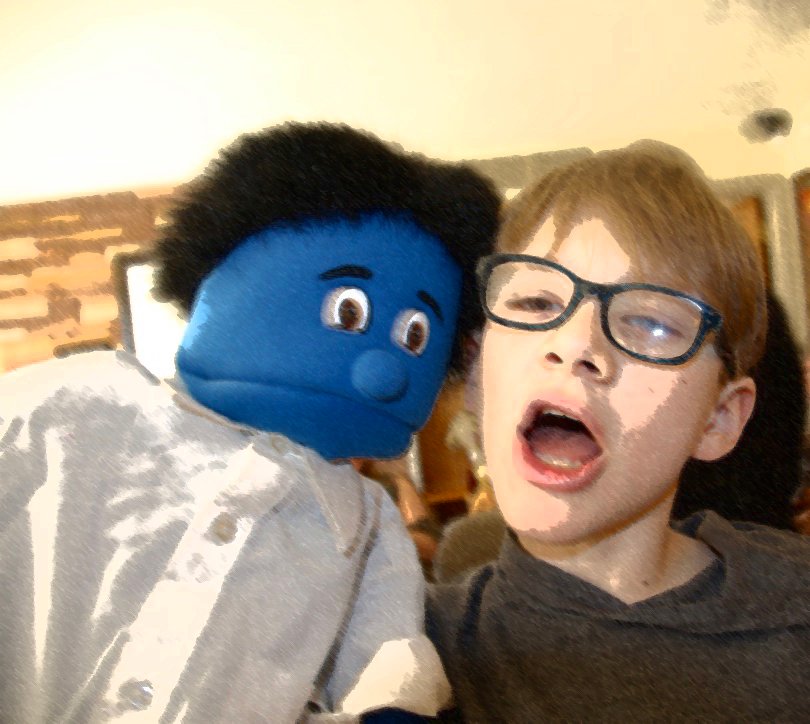
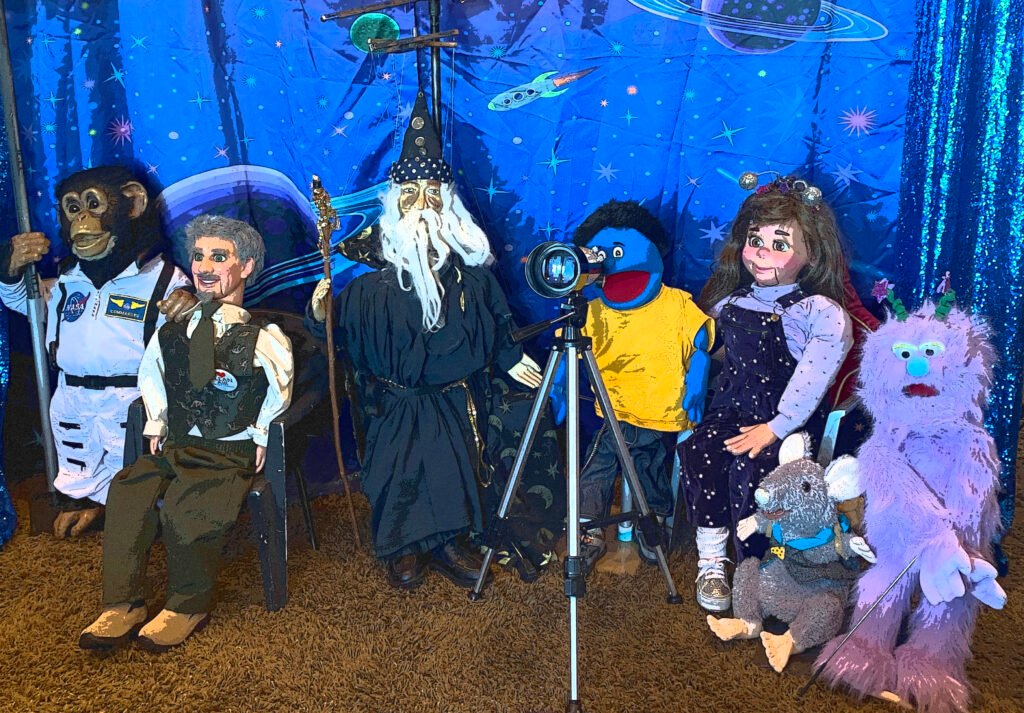
Students using Mrs. T’s , Blue vent figure.
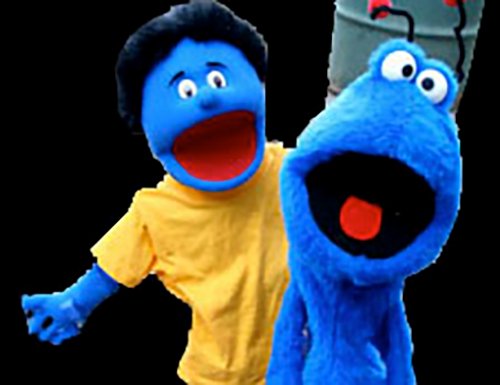
Classroom exercise
Blue is blue, he’s blue, and his name is Blue. He feels sad because he’s blue.
Buggsy sings him a song about being Blue, because he is blue too.
Blue is the color of the blue sky.
Blue is the color of the sea.
Blue is the color of blueberries,
And blue is the color of me.
Blue is the color of bluebirds flying high
high above the trees.
And blue is the color of mommy and
daddy, and blue is the color of me.
Are you still here? If you are, put your finger over your closed lips.
Sing “Twinkle, Twinkle, Little Star.”
If you can do this without moving your lips,
Then you are on your way to becoming a
ventriloquist!
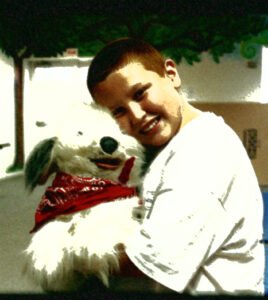
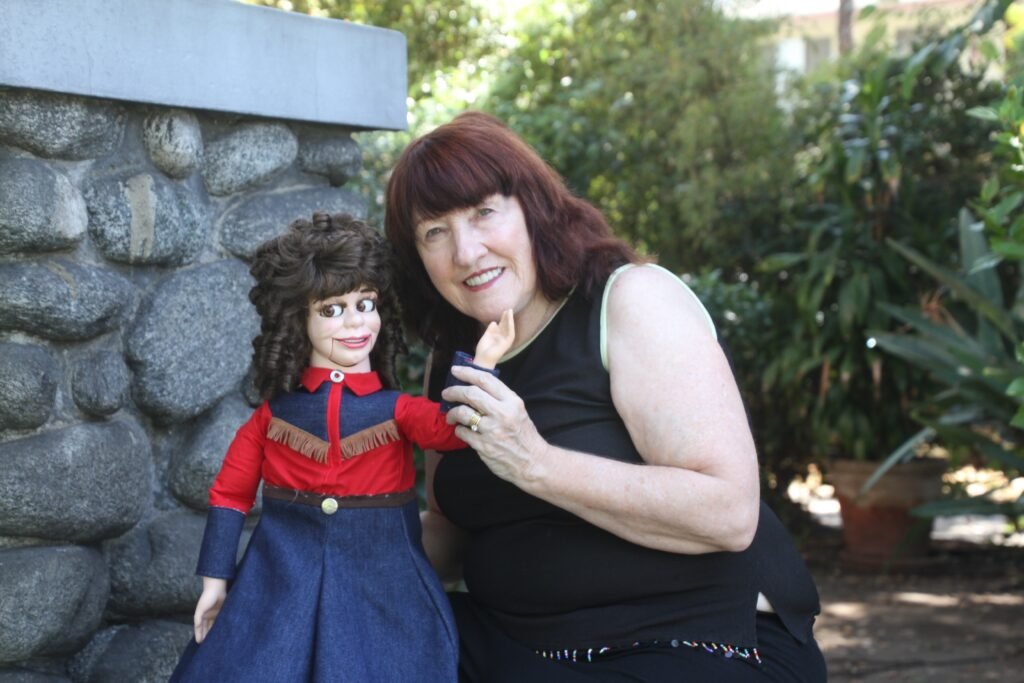
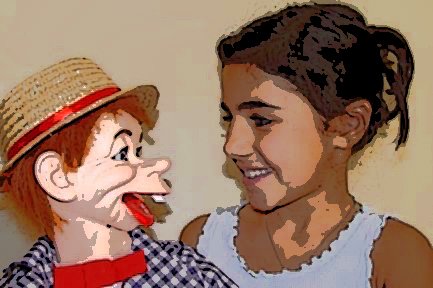
Burney is popular with among teens, especially
troubled teens.
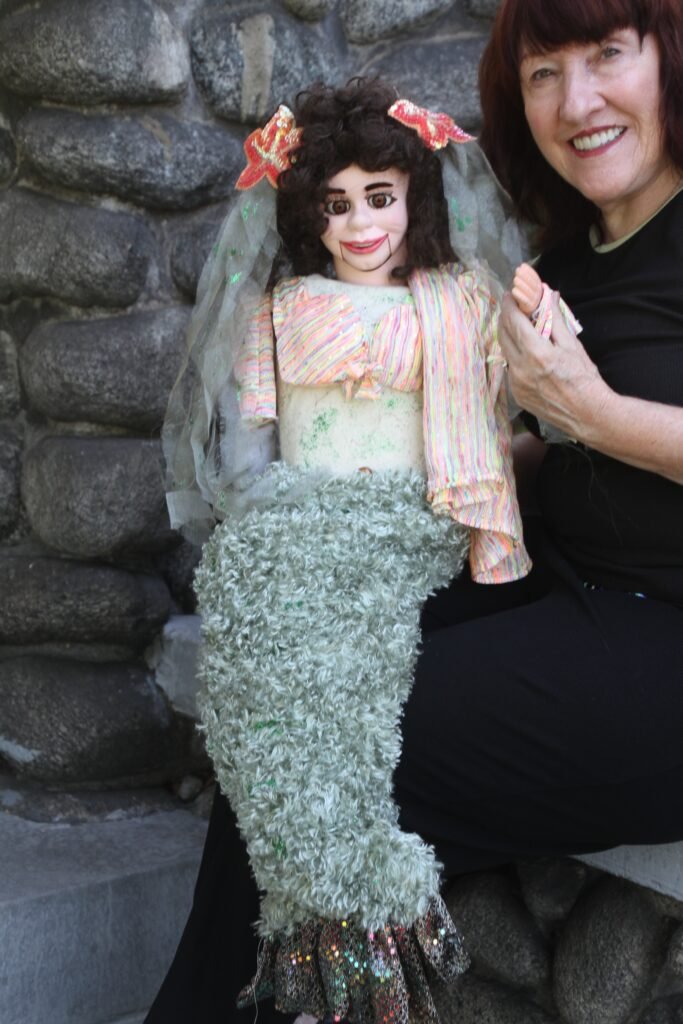
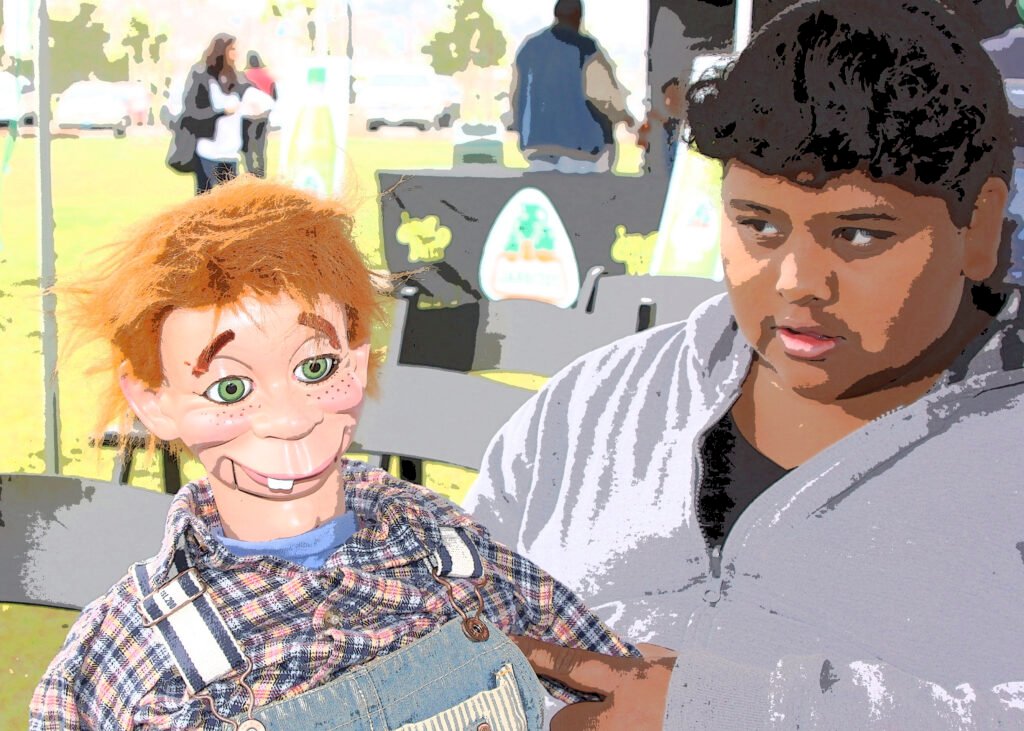
Sample ventriloquist scripts are on the 1 World Education Free Resource Page.
Contact 1 World Education. Email Penelope Torribio